Learn Xhosa online

Empty space, drag to resize
isiXhosa is a Nguni-Bantu language and the language Nelson Mandelas. The language is famous for its three types of click launders from the Khoisan substrate. Our online language course systematically introduces you to the click mood, and you will also learn about everyday conversation, cityship length and Ubuntu philosophy. The learning program will prepare you for stays in Port Elizabeth, East London or Cape Town's Xhosa community. Combined isiXhosa with isiZulu, Sesotho, Swahili or isiNdebele.

Find your appropriate experience

Discover the perfect online language course at Sankofa Lingua Academy that is tailored to your level of experience:

Xhosa for beginners (A1)

  • Skills for daily conversation building
  • Imagine self-confident before
  • Simple sentences form

Xhosa for Explorers (A2)

  • Improvement of the Reading
  • In-depth discussions lead
  • Cultural Researching aspects

Xhosa for Champion (B1)

  • Depression of the Text understanding
  • Enhance Your writing skills
  • Basic grammar dominance
 You can change the level of experience within the first two lessons if you find it too hard or too easy.

Three levels, one goal: talk Xhosa

Whether beginners or advanced. Find the online course at Sankofa Lingua Academy that suits you.
STARTE DEINE WEG IN Xhosa

Xhosa for beginners (A1)

In only a few weeks you speak your first sentences on Xhosa and surprises family and friends with a language that only a few Europeans master.


  • Self-confident introduce
  • Simple sentences form and understand
  • Basic word for everyday life
  • The special Xhosa leaf pronounce correctly


After this course: You'll start talking to Xhosa and master simple everyday situations


Discover Xhosa on a new level

Xhosa for Explorers (A2)

You already understand the basics? It's gonna be exciting. Discover the culture behind the language and conduct conversations that go beyond Smalltalk.


  • Expenditure Talking
  • Read texts and understand
  • Cultural background and get to know proverbs
  • Vocabulary to expand

After this course: You are more fluent and understand cultural relationships.
Speak Xhosa with clarity and depth

Xhosa for Champion (B1)


Time for the next step. Master the grammar and communicate at a level that impresses native speakers.

  • More complex set structures dominance
  • Own Texts and news write
  • Read more demanding texts and understand
  • Talks diverse topics sovereign guide

After this course: You read, write and speak Xhosa with self-confidence.
African countries
Dialects
Languages in South Africa
Languages in Lesotho

Xhosa courses

3 editions: New Year, Summer, Winter
Each edition lasts 10 weeks (about 20 hours)
On average 2-hour sessions per week
Our language courses are designed as group courses.
 For smaller groups, the duration of instruction is adjusted. Don't worry: the teaching quality remains the same.

Number Duration of teaching
1 – 2 participants 60 min
3 – 4 participants 90 min
5 – 10 participants 120 min
10+ participants 120 min + Breakout Groups

New Year Edition (NYE) 2026

16. February 2026
to
3. May 2026

Summer Edition (SE) 2026

01. June 2026
to
02. August 2026

Winter Edition (WE) 2026

14. September 2026
to
29. November 2026

Languages in South Africa: Xhosa

Xhosa, also called isiXhosa, is one of the most fascinating languages in South Africa. The Xhosa are an ethnic group in southern Africa and belong to Niger-Kongo-Sprachfamilie, especially for Nguni-Zweig. With about 9 million speakers, they account for around 18% of the South African population and, according to Zulu, are the second largest ethnic group in the country.

While most Africans do not Click-Laute know, this speciality makes Xhosa unique. The characteristic clicks were taken over by the San and Khoikhoi. In addition, Xhosa is a sound language like Twi, Lingala and Oromo, where the pitch changes the meaning of words. Nelson Mandela spoke Xhosa as a native language. Other than the kuschitische Somali belongs to Xhosa Bantu language family and is closely related to Zulu.

You want to learn Xhosa? Discover our language courses on Sankofa Lingua and dive into the world of click laute.

The roots of the Xhosa

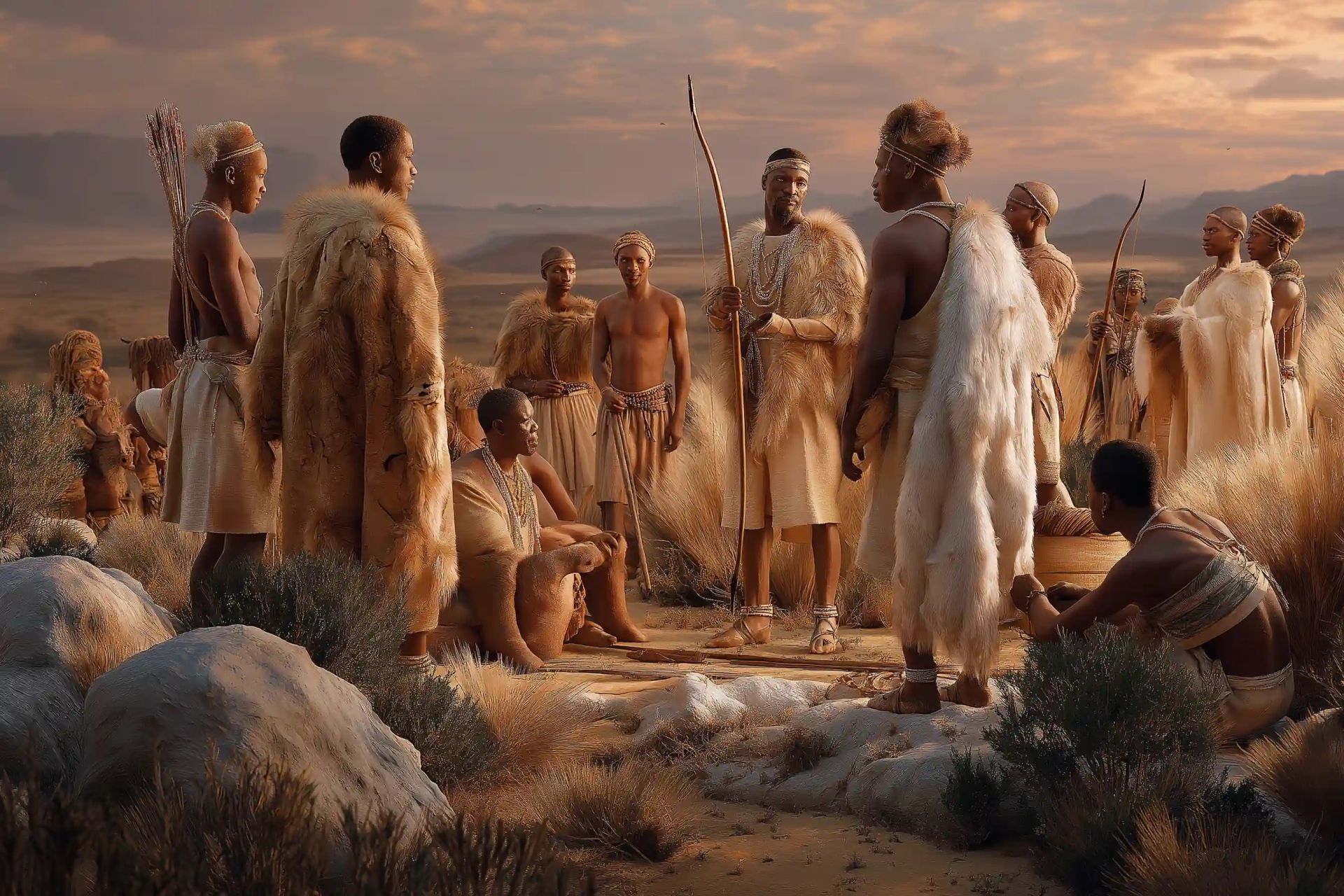
The 7th century southern Africa by Khoisan-Völkern inhabited, hunters and collectors who have lived in this region for thousands of years. In this time other Migration movements of human history, the so-called Bantu expansion. Bantu-Völker moved from Central and East Africa to the south and brought farms, livestock farming and new languages. Among them were the ancestors of the Xhosa who reached today's South Africa and met the local population there.

Before the 15th century Tshawe founded the Xhosa kingdom and expanded the kingdom toward the south. What followed was not a simple displacement, but a complex process of integration. The Xhosa integrates the Khoisan groups into their political system, made them tributable and spread their language isiXhosa among the subject peoples. But the Khoisan also left her own traces in the language their new rulers. From this intense and centuries-long contact, the characteristic click route emerged, which today distinguishes Xhosa fundamentally from other Bantu languages. 

Even the name "Xhosa" itself is probably from the Khoisan and is translated as "grained men" or "wild". This fusion of two completely different language families makes Xhosa linguistically unique. The grammatical structure follows the rules of Bantu languages, while the phonetics the unmistakable Khoisan-Clicks. 
The Clan (isiduko) still characterizes the identity of the Xhosa. Each Xhosa knows its clan name, which serves as a primary recognition feature. In encounters, the exchange of the clans names is often part of the welcome to clarify the mutual position.

The strongest effect is the choice of partners. Persons with the same Clan name are considered related and may not marry. Before each wedding, the origins of both families are tested. In rural areas, the Clan continues to determine the political leadership. Only those who come from the royal amaTshawe-Clan can be recognized as chief.

What makes Xhosa language unique

Most Xhosa spokesmen live in the provinces East Cape and West Cape in South Africawhere the clicks are particularly often heard. Smaller communities can also be found Zimbabwe and Botswana and Lesotho. The identity of the Xhosa is deeply rooted in the line of origin and the concept of Ubuntuthat as "I am because we are".

IsiXhosa is an agglutinic tone language. This means that words are formed by adding affixes. Similar to the word "unfortunate" in German, Xhosa also works by building blocks. The pitch additionally influences the word meaning. The Xhosa language includes also 18 click consonants, originally taken over by the Khoisan people. These characteristic click-louds today make about a sixth of the language isiXhosa.

The You can click in three basic types which are each generated by different tongue positions. Each of these clicks has a characteristic sound that can also be imitated by western tongues with some exercise.
Article Sound Tongue position Comparing everyday life
c

Type
Dental implants
"tsk-tsk"  Tongue tip against front teeth  Missing snare
q

Type
Alveolar
Knalling noise  Tongue jerking off the palate  Pulling corks from bottle
x

Type
Lateral
Side suction  Tongue laterally on the palate  Driving horses

The caption of the Xhosa

Xhosa is written with the Latin alphabet. This form of writing was introduced by missionaries in the early 19th century. For centuries the language existed exclusively orally, handed over by stories, praises and ritual songs. 

The first copy of the language was made in 1823 on the banks of the Tyhume River in Alice in East Cape. Scottish missionary John Bennie is considered a pioneer who first recorded isiXhosa and developed the first Orthography. The standardization of spelling was a long process. Various missionaries and later also African scholars developed different systems, leading to inconsistencies. The today's standardised spelling goes significantly on agreements from 1931 back.

Nelson Mandela: A Xhosa between tradition and politics

Nelson Mandela was far more than a political leader. He was a Xhosa from the royal family of Thembu and heard Madiba-Clan on. His identity and political path were inseparably linked to the colonial history of the Xhosa nation. He was born in 1918 in Qunu in Ostkap, a region deeply rooted in the traditions of the Xhosa. During apartheid, the Xhosa spokesmen were forced to live in the so-called Homelands Transkei and Ciskei. These Bantustans were artificially created areas that served the white minority government to control the black population and its political rights in the rest of South Africa.

Mandela's political consciousness became strong through the oral tradition of his people's history a. As a child, he heard stories about the nine border wars in which the Xhosa defended their independence for over a century and their country against British troops and Buren. The stories of brave chiefs and lost battles formed his understanding of resistance and dignity. The Xhosa had never surrendered, and this tradition of resistance should shape Mandela's political philosophy.

The connection to the Xhosa culture also remained visible in its political life. With his Riron and speeches Mandela was often accompanied by a traditional praise singer, an imbongi. These poets recited izibongo poetry, calling the deeds of the ancestors and the identity of the nation. For the Xhosa this was not merely a folklore, but a lively memory of common values and historical struggles. 

Almonda used it Symbol for the recovery of unitthat the apartheid had destroyed. His presidency was shaped by the concept of Ubuntu, deeply rooted in the Xhosa philosophy. "I am because we are" became the basis of his policy of reconciliation. Mandela remained faithful to his Xhosa identity until his death in 2013 and was buried in Qunu where his history began.

Frequently asked questions about the Xhosa course

Language families to Xhosa

Atlantic Congo
  • Cangin
  • Gola
  • Limba
  • Mansoanka
  • Melt
  • North Central Atlantic

Volta-congo
Benue-Kongo
  • Acpes edoid
  • Bantoid
  • Northern Bantoid

Southern Bantoid
  • Beboid
  • Bendic
  • Bishuo
  • Buru-Angwe
  • Busuu
  • Ecoid mbe
  • Jarawan
  • Mammals

Enges Bantu (Narrow Bantu)
  • Bantu A–B10–B20–B30
  • Central-West Bantu

Ostbantu
  • Bottwe
  • Corridor-Bantu
  • Great lega
  • Kilombero
  • Mbugwe-Langi
  •  Northeast Savan Bantu
  • North Mozambique-Bantu
  • Nyaturu-Nilamba
  • Rufiji Ruvuma
  • Sabi

Southern Bantu
  • Core-South Bantu
  • Dim-Suffix-South Bantu
  • Nguni–Tsonga–Copi
  • Nguni
  • Core-Nguni
  • Southern Ndebele–Tiefland
 
Swati

Xhosa
  • Bhaca
  • Bomvana
  • Celebrity
  • Gaika
  • Gcaleka
  • Hlubi
  • Mfengu
  • Mpondo
  • Mpondomise
  • Ndlamb
  • Rhathab
  • Thembu
  • Xesibe

Sign up for our newsletter

Get weekly updates on live streams, messages and more directly into your mailbox.
Thank you!
Chat with us on WhatsApp